
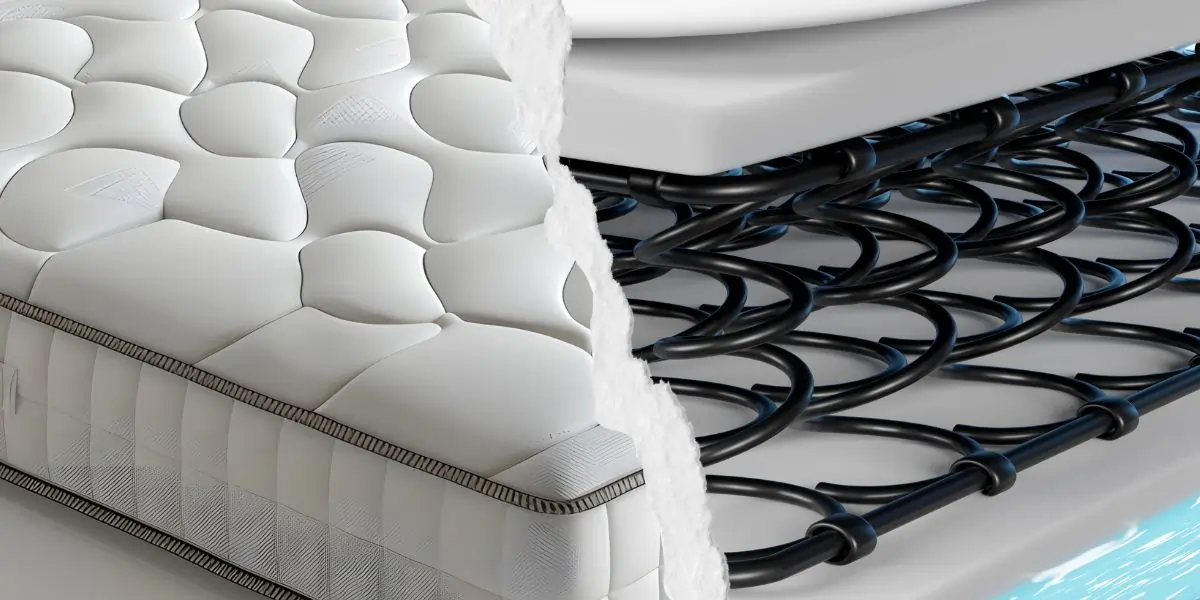
Choosing the perfect mattress can significantly impact your sleep quality and overall health. With so many options available in the market, it becomes challenging to decide between a foam mattress and a spring mattress. At Aradhana Furnishing Mattress Shop in Ghaziabad , we understand how crucial a good night’s sleep is, which is why we provide a detailed comparison to help you make an informed decision.
This guide will explore everything from comfort and support to durability, price, and suitability for back pain. By the end, you will clearly understand which mattress type aligns with your preferences.
Foam Mattress vs Spring Mattress for Back Pain
One of the most critical factors in mattress selection is support for your spine. Many people suffer from back pain, making it essential to choose a mattress that offers proper alignment.
Foam mattresses, particularly memory foam, contour to your body shape, providing support exactly where it’s needed. This feature ensures even weight distribution, reducing pressure on the spine, shoulders, and hips. Consequently, foam mattresses are often recommended by chiropractors for people with chronic back pain.
On the other hand, spring mattresses provide a firmer feel due to their coil system. While they may not contour like foam, they offer robust support and bounce, which some individuals prefer. However, uneven wear over time can lead to sagging, potentially worsening back pain.
Transition tip: If you prioritize pressure relief and gentle support, foam mattresses tend to be the better choice. Conversely, if you prefer a bouncy, firm feel, spring mattresses may suit your needs.
Foam Mattress vs Spring Mattress: Pros and Cons
Choosing between foam and spring mattresses depends on understanding their advantages and limitations.
Pros of Foam Mattresses
- Excellent body contouring that alleviates pressure points.
- Motion isolation, ideal for couples who share a bed.
- Hypoallergenic options available, reducing dust mites and allergens.
Cons of Foam Mattresses
- Foam tends to retain heat, which may be uncomfortable for hot sleepers.
- Heavier to move, making cleaning or rearrangement slightly challenging.
- Initial off-gassing may cause a temporary odor.
Pros of Spring Mattresses
- Strong support suitable for heavier individuals.
- Bouncy and responsive feel, preferred by people who move a lot while sleeping.
- Enhanced airflow keeps the mattress cooler than foam.
Cons of Spring Mattresses
- May develop squeaks or uneven wear over time.
- Less effective motion isolation; movements can disturb a partner.
- Generally requires a mattress topper for added comfort.
Transition tip: Consider your sleeping style, climate, and partner’s preferences when weighing the pros and cons.
Memory Foam Mattress vs Spring Mattress
Memory foam mattresses and traditional spring mattresses differ significantly in terms of comfort and support. Memory foam is designed to mold to your body, providing pressure relief and promoting spinal alignment. This makes it particularly beneficial for side and back sleepers.
Spring mattresses rely on interconnected coils, which provide bounce and firmness. While they may not contour like memory foam, they allow for better airflow, which helps regulate body temperature during sleep.
Additionally, memory foam excels in absorbing motion. If you sleep with a partner, foam mattresses reduce disturbances from tossing and turning. In contrast, spring mattresses can transfer movement, potentially disturbing light sleepers.
Transition tip: When comparing memory foam and spring options, consider whether you prioritize contouring comfort or a firmer, cooler sleep surface.
Foam vs Spring Mattress Durability
Durability is another essential aspect to consider. Foam mattresses, especially high-density options, generally last 7–10 years. Memory foam maintains its shape and support for many years if cared for properly. However, low-density foam can sag faster, affecting comfort.
Spring mattresses typically last around 8–12 years, depending on coil quality and usage. Bonnell coils tend to wear unevenly faster than pocketed springs, which distribute weight more effectively. Choosing a high-quality spring mattress ensures prolonged support and comfort.
Transition tip: For longevity, always check the density of foam or the coil gauge in spring mattresses. Investing in a durable mattress saves money in the long term.
Spring Mattress vs Foam Mattress in India
In India, consumer preferences vary based on climate, affordability, and availability. Foam mattresses are increasingly popular in urban areas due to their comfort and modern design. Brands often offer memory foam, gel-infused foam, and latex foam to cater to different needs.
Spring mattresses remain a traditional favorite, especially in regions with warmer climates. Their airflow and cooler sleeping surface make them suitable for hot and humid conditions. Additionally, spring mattresses are widely available in a variety of price ranges, making them accessible to a broad audience.
Transition tip: Consider your local climate and sleeping habits when choosing between foam and spring mattresses in India.
Foam Mattress vs Spring Mattress Price
Price plays a significant role in mattress selection. Foam mattresses tend to be slightly more expensive due to the advanced materials used, especially in memory foam and gel-infused options. Prices range from budget-friendly models to premium varieties, allowing customers to choose according to their comfort preferences.
Spring mattresses usually have a lower starting price, especially with Bonnell coil models. Pocket spring mattresses, however, can be more expensive, comparable to mid-range foam mattresses. It’s essential to balance comfort, support, and price to find the best mattress for your needs.
Transition tip: Always compare the features and longevity of foam and spring mattresses rather than just the initial cost.
Which Lasts Longer: Foam or Spring Mattress?
When it comes to lifespan, both foam and spring mattresses have their advantages. High-density foam mattresses tend to maintain their shape for many years, while low-quality foam can sag quickly.
Spring mattresses, especially pocket spring models, offer long-term durability but may develop uneven wear over time. Regular maintenance, such as rotating the mattress and using a proper base, can extend the life of both types.
Transition tip: For long-lasting support, prioritize quality materials and proper care regardless of the mattress type.
Conclusion: Choosing the Right Mattress for You
Choosing between a foam mattress and a spring mattress depends on your sleeping style, comfort preferences, and budget.
- For back pain: Foam mattresses, particularly memory foam, provide superior pressure relief and spinal alignment.
- For a cooler sleep surface: Spring mattresses with good airflow may be more comfortable.
- For motion isolation: Foam mattresses minimize partner disturbance.
- For durability and longevity: Both foam and high-quality spring mattresses can last a decade if maintained properly.
At Aradhana Furnishing, we offer a wide range of foam and spring mattresses to meet every comfort and budget requirement. Visit our store or browse online to find the mattress that ensures restful and rejuvenating sleep.